
landten@lists.flabarrpptl.org

RPPTL Real Estate Leasing Committee

View all threads

[RPPTL LandTen] Foreclosure Issues

AJ
Arthur J. Menor
Thu, Feb 5, 2009 6:50 PM

Here is a story that appeared the Daily Business Review.

Urban Forum
Tenant rights advocate gives voice to renters in foreclosed properties

January 30, 2009 By: Paola Iuspa-Abbott

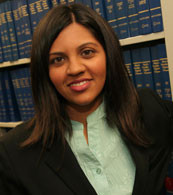
Purvi Shah

<http://oasc05134.247realmedia.com/RealMedia/ads/click_lx.ads/Incisive/F
inancialProffesional/L30/1313973761/Middle1/BBN/247RM_200805_Incisive_Mu
lti/LTondem_300x250-nov.gif/52526d7952456d4c4d6c384141797042?x>

<http://oascentral.law.com/RealMedia/ads/click_lx.ads/dailybusinessrevie
w.com/L23/2127250529/Middle2/ALMmedia/Z_House_FloridaBillingSurvey_Ads/F
Lbilling250x300.gif/524e5845796b6b4a766c4141412f6232?x> 
hen landlords are in the process of losing their apartment buildings to
foreclosure, they often stop maintaining the properties. Leaks begin to
surface, floors cave in, and sewer systems overflow. Low-income renters
are left to fend for themselves, often unaware of the pending litigation
on the property and the inevitable eviction that comes at the conclusion
of the foreclosure lawsuit. Yet, they have a friend in attorney Purvi
Shah, an advocate for tenant rights. She works with the Community
Justice Project of Florida Legal Services and focuses on tenant and
landlord issues prevalent in low-income communities. Her legal advocacy
group offers direct legal services and community legal education.

For the last two years, a foreclosure crisis has generated a layer of
victims who are finding little relief in the court system: tenants. They
are rarely made aware of ongoing foreclosure procedures and rarely have
a chance to go before a judge to tell their stories. Shah said judges
and local governments need to step in when landlords - still collecting
rent - let their properties deteriorate and their tenants live in unsafe
conditions. She said judges could force landlords to improve their
tenants' living conditions and persuade lenders to allow tenants to
remain in the foreclosed properties until a new buyer comes along. Early
this month, Fannie Mae announced a new National Real Estate Owned (REO)
Rental Policy that will allow qualified renters in Fannie Mae-owned
foreclosed properties to remain in their homes, according to its Web
site. The company currently has an eviction suspension in place through
the end of January, when a new policy is expected to be up and running.

Shah spoke to the Daily Business Review about the hardships that
low-income tenants must endure to continue living in a place affordable
to them but in an unsafe environment. She also discussed the role that
judges could play in giving renters a voice in the foreclosure procedure
and the need for more laws protecting their rights.

The interview has been edited for length and clarity.

How are tenants being left out of the foreclosure process?

They generally don't have a lot of rights in the foreclosure process and
are often viewed by lenders and the landlords as a liability. They are
innocent victims who paid their rents consistently and didn't enter into
a mortgage with anybody but are now being threatened with loss of their
housing. They are also being subjected to a host of situations for the
lack of property maintenance and a vacuum of responsibilities from the
landlords and the lenders. They are not required to be given notice of a
foreclosure and don't have a forum to ever discuss what's happening to
them. They are generally not included in anybody's calculations, either
the lender, the owner or the judge.

What are the potential complications of living in a multifamily property
tangled in a foreclosure dispute?

During the pendency of the foreclosure, you have an owner that is no
longer interested in maintaining the property and a lender that is not
an owner yet and has no obligation to maintain the property.

Often tenants have no one to call if there is a leak or other problems.
And more seriously, there is no one who is paying the utilities bill. We
have a property at 1525 NW 59th St. that has been in foreclosure for
almost three years. About a year ago, I was contacted by a community
group that had heard about these tenants living on the property without
water. The landlord had stopped paying the water bill. There were single
mothers with young children with no access to running water. They were
purchasing drinking water and were unable to take showers. They were
living in very dangerous and unsafe conditions. We brought litigation
against the landlord. We asked Miami-Dade Circuit Judge Bronwyn Miller
to order the landlord to continue paying the water bill. But you have
landlords who argue that they don't have the money to do that. The judge
ordered the landlord to pay the bill for two months and threatened to
send him to jail if he didn't. He paid for two months, and then the
tenants had to collect money to pay for the water bill themselves.

Did you try to contact the lender?

We tried to communicate with Commerce Bank but nothing happened. Lenders
see tenants as a liability. They think their job is to sell the property
once they get title to it. Lenders need to reframe their understanding
... they are in the middle of the subprime market crash and are holding
numerous properties that they are not going to be able to sell because
the mortgages are upside down. They need to start viewing tenants as an
asset to a property, instead of evicting them to sell a vacant property.
If they are unable to sell the properties, they will be subject to
vandalism and crime, ultimately further devaluing property values in the
neighborhood.

What kind of legal recourse do tenants have?

The law in Florida is behind the time. There aren't enough laws that
protect tenant rights. We need a forum for tenants to talk to judges
about what is happening to them. There are some judges that are taking
really good measures. Miami-Dade Circuit Judge Jennifer Bailey requires
a hearing before she will issue a final writ of possession in a
foreclosed property. But there is not a requirement to do so.

What role should judges play in protecting tenants' rights?

Our position is judges need to follow Judge Bailey's lead, be proactive
in protecting tenants. Judges have the ability and the authority to
mandate that owners and lenders report to them whether there are tenants
living in their properties and report who is conducting maintenance.
Judges can require them to do regular updates to the court during the
pendency of a foreclosure, check in about what kind of notices these
tenants have received and hold a hearing prior to issuing any final writ
of possession to speak with the tenants. At that point, the judge could
help mediate their situation and work out a move-out date that is fair
or encourage the lender and owner to sign a lease with the existing
tenant. For the tenant in a foreclosed property, their eviction becomes
final as soon as the foreclosure is final and they have no fighting
chance to prevent their homelessness. These hearings are simply the
first step because tenants really need judges to protect their rights
earlier in the foreclosure process. It can take two to three years
before a final judgment is handed down by a judge. A solitary hearing at
the end of the foreclosure case will not protect innocent families and
children from being forced to live in unsafe, uninhabitable units
because irresponsible lenders and owners refuse to maintain the
properties as required by Florida law.

What are local governments doing to address this situation?

At some point the buck needs to stop somewhere. We are talking about
properties with serious life safety issues: floors falling in, sewage
going on and utilities cut off. If irresponsible owners and
irresponsible lenders don't want to clean up the mess that they made,
local governments should step in, make repairs to the property and put a
lien against the property to ensure these victims of the foreclosure
crisis continue to have stable and safe housing. Tenants are vital
components of our community.

Is there a grassroots movement pushing for tenants rights?

We've been working a lot with local organizations including Power U
Center for Social Change in Miami and Miami Workers Center in Liberty
City because tenants in those communities are going to those
organizations to ask for help.

Do tenants have any tool to help themselves?

If their landlords refuse to make those repairs, tenants can withhold
their rent, as allowed by the law.

Paola Iuspa-Abbott can be reached at (305) 347-6657.

Purvi Shah photo by Richard M. Brooks

Arthur J. Menor
Partner


Shutts & Bowen LLP
1100 CityPlace Tower, 525 Okeechobee Boulevard | West Palm Beach, FL
33401
Direct: (561) 650-8510 | Fax: (561) 822-5510
E-Mail mailto:AMenor@shutts.com  | Biography
<http://www.shutts.com/index.cfm/fa/attorney.bio/atty/8051073b-833e-444a
-8b57-a6912a6d5435/Arthur_J_Menor.cfm/>  | V-Card
<http://www.shutts.com/index.cfm/fa/attorney.vcf/atty/8051073b-833e-444a
-8b57-a6912a6d5435/Arthur_J_Menor.cfm/>  | Website
http://www.shutts.com/

IRS CIRCULAR 230 NOTICE:  Pursuant to recently enacted
U.S. Treasury Department Regulations, we are now required
to advise you that, unless otherwise expressly indicated,
any federal tax advice expressed above was neither
written nor intended by the sender or this firm to be
used and cannot be used by any taxpayer for the purpose
of avoiding penalties that may be imposed under U.S. tax
law.  If any person uses or refers to any such tax advice
in promoting, marketing or recommending a partnership or
other entity, investment plan or arrangement to any
taxpayer, then the advice should be considered to have
been written to support the promotion or marketing by a
person other than the sender or this firm of that
transaction or matter, and such taxpayer should seek
advice based on the taxpayer's particular circumstances
from an independent tax advisor.

The information in this email transmission is privileged
and confidential.  If you are not the intended recipient,
nor the employee or agent responsible for delivering it to
the intended recipient, you are hereby notified that any
dissemination or copying of this transmission (including
any attachments) is strictly prohibited.  If you have
received this email in error, please notify the sender by
email reply.  Thank you.

Here is a story that appeared the Daily Business Review. Urban Forum Tenant rights advocate gives voice to renters in foreclosed properties January 30, 2009 By: Paola Iuspa-Abbott Purvi Shah <http://oasc05134.247realmedia.com/RealMedia/ads/click_lx.ads/Incisive/F inancialProffesional/L30/1313973761/Middle1/BBN/247RM_200805_Incisive_Mu lti/LTondem_300x250-nov.gif/52526d7952456d4c4d6c384141797042?x> <http://oascentral.law.com/RealMedia/ads/click_lx.ads/dailybusinessrevie w.com/L23/2127250529/Middle2/ALMmedia/Z_House_FloridaBillingSurvey_Ads/F Lbilling250x300.gif/524e5845796b6b4a766c4141412f6232?x> hen landlords are in the process of losing their apartment buildings to foreclosure, they often stop maintaining the properties. Leaks begin to surface, floors cave in, and sewer systems overflow. Low-income renters are left to fend for themselves, often unaware of the pending litigation on the property and the inevitable eviction that comes at the conclusion of the foreclosure lawsuit. Yet, they have a friend in attorney Purvi Shah, an advocate for tenant rights. She works with the Community Justice Project of Florida Legal Services and focuses on tenant and landlord issues prevalent in low-income communities. Her legal advocacy group offers direct legal services and community legal education. For the last two years, a foreclosure crisis has generated a layer of victims who are finding little relief in the court system: tenants. They are rarely made aware of ongoing foreclosure procedures and rarely have a chance to go before a judge to tell their stories. Shah said judges and local governments need to step in when landlords - still collecting rent - let their properties deteriorate and their tenants live in unsafe conditions. She said judges could force landlords to improve their tenants' living conditions and persuade lenders to allow tenants to remain in the foreclosed properties until a new buyer comes along. Early this month, Fannie Mae announced a new National Real Estate Owned (REO) Rental Policy that will allow qualified renters in Fannie Mae-owned foreclosed properties to remain in their homes, according to its Web site. The company currently has an eviction suspension in place through the end of January, when a new policy is expected to be up and running. Shah spoke to the Daily Business Review about the hardships that low-income tenants must endure to continue living in a place affordable to them but in an unsafe environment. She also discussed the role that judges could play in giving renters a voice in the foreclosure procedure and the need for more laws protecting their rights. The interview has been edited for length and clarity. How are tenants being left out of the foreclosure process? They generally don't have a lot of rights in the foreclosure process and are often viewed by lenders and the landlords as a liability. They are innocent victims who paid their rents consistently and didn't enter into a mortgage with anybody but are now being threatened with loss of their housing. They are also being subjected to a host of situations for the lack of property maintenance and a vacuum of responsibilities from the landlords and the lenders. They are not required to be given notice of a foreclosure and don't have a forum to ever discuss what's happening to them. They are generally not included in anybody's calculations, either the lender, the owner or the judge. What are the potential complications of living in a multifamily property tangled in a foreclosure dispute? During the pendency of the foreclosure, you have an owner that is no longer interested in maintaining the property and a lender that is not an owner yet and has no obligation to maintain the property. Often tenants have no one to call if there is a leak or other problems. And more seriously, there is no one who is paying the utilities bill. We have a property at 1525 NW 59th St. that has been in foreclosure for almost three years. About a year ago, I was contacted by a community group that had heard about these tenants living on the property without water. The landlord had stopped paying the water bill. There were single mothers with young children with no access to running water. They were purchasing drinking water and were unable to take showers. They were living in very dangerous and unsafe conditions. We brought litigation against the landlord. We asked Miami-Dade Circuit Judge Bronwyn Miller to order the landlord to continue paying the water bill. But you have landlords who argue that they don't have the money to do that. The judge ordered the landlord to pay the bill for two months and threatened to send him to jail if he didn't. He paid for two months, and then the tenants had to collect money to pay for the water bill themselves. Did you try to contact the lender? We tried to communicate with Commerce Bank but nothing happened. Lenders see tenants as a liability. They think their job is to sell the property once they get title to it. Lenders need to reframe their understanding ... they are in the middle of the subprime market crash and are holding numerous properties that they are not going to be able to sell because the mortgages are upside down. They need to start viewing tenants as an asset to a property, instead of evicting them to sell a vacant property. If they are unable to sell the properties, they will be subject to vandalism and crime, ultimately further devaluing property values in the neighborhood. What kind of legal recourse do tenants have? The law in Florida is behind the time. There aren't enough laws that protect tenant rights. We need a forum for tenants to talk to judges about what is happening to them. There are some judges that are taking really good measures. Miami-Dade Circuit Judge Jennifer Bailey requires a hearing before she will issue a final writ of possession in a foreclosed property. But there is not a requirement to do so. What role should judges play in protecting tenants' rights? Our position is judges need to follow Judge Bailey's lead, be proactive in protecting tenants. Judges have the ability and the authority to mandate that owners and lenders report to them whether there are tenants living in their properties and report who is conducting maintenance. Judges can require them to do regular updates to the court during the pendency of a foreclosure, check in about what kind of notices these tenants have received and hold a hearing prior to issuing any final writ of possession to speak with the tenants. At that point, the judge could help mediate their situation and work out a move-out date that is fair or encourage the lender and owner to sign a lease with the existing tenant. For the tenant in a foreclosed property, their eviction becomes final as soon as the foreclosure is final and they have no fighting chance to prevent their homelessness. These hearings are simply the first step because tenants really need judges to protect their rights earlier in the foreclosure process. It can take two to three years before a final judgment is handed down by a judge. A solitary hearing at the end of the foreclosure case will not protect innocent families and children from being forced to live in unsafe, uninhabitable units because irresponsible lenders and owners refuse to maintain the properties as required by Florida law. What are local governments doing to address this situation? At some point the buck needs to stop somewhere. We are talking about properties with serious life safety issues: floors falling in, sewage going on and utilities cut off. If irresponsible owners and irresponsible lenders don't want to clean up the mess that they made, local governments should step in, make repairs to the property and put a lien against the property to ensure these victims of the foreclosure crisis continue to have stable and safe housing. Tenants are vital components of our community. Is there a grassroots movement pushing for tenants rights? We've been working a lot with local organizations including Power U Center for Social Change in Miami and Miami Workers Center in Liberty City because tenants in those communities are going to those organizations to ask for help. Do tenants have any tool to help themselves? If their landlords refuse to make those repairs, tenants can withhold their rent, as allowed by the law. Paola Iuspa-Abbott can be reached at (305) 347-6657. Purvi Shah photo by Richard M. Brooks Arthur J. Menor Partner ________________________________ Shutts & Bowen LLP 1100 CityPlace Tower, 525 Okeechobee Boulevard | West Palm Beach, FL 33401 Direct: (561) 650-8510 | Fax: (561) 822-5510 E-Mail <mailto:AMenor@shutts.com> | Biography <http://www.shutts.com/index.cfm/fa/attorney.bio/atty/8051073b-833e-444a -8b57-a6912a6d5435/Arthur_J_Menor.cfm/> | V-Card <http://www.shutts.com/index.cfm/fa/attorney.vcf/atty/8051073b-833e-444a -8b57-a6912a6d5435/Arthur_J_Menor.cfm/> | Website <http://www.shutts.com/> IRS CIRCULAR 230 NOTICE: Pursuant to recently enacted U.S. Treasury Department Regulations, we are now required to advise you that, unless otherwise expressly indicated, any federal tax advice expressed above was neither written nor intended by the sender or this firm to be used and cannot be used by any taxpayer for the purpose of avoiding penalties that may be imposed under U.S. tax law. If any person uses or refers to any such tax advice in promoting, marketing or recommending a partnership or other entity, investment plan or arrangement to any taxpayer, then the advice should be considered to have been written to support the promotion or marketing by a person other than the sender or this firm of that transaction or matter, and such taxpayer should seek advice based on the taxpayer's particular circumstances from an independent tax advisor. The information in this email transmission is privileged and confidential. If you are not the intended recipient, nor the employee or agent responsible for delivering it to the intended recipient, you are hereby notified that any dissemination or copying of this transmission (including any attachments) is strictly prohibited. If you have received this email in error, please notify the sender by email reply. Thank you.